Friendship
Five people who trust only each other. Ferro dies without telling the Dragona anything, his head on Ibrahim’s shoulder. Nobody wants to leave without Apa.
“Guys, you’ve got everything ready? Passports? Tickets?” “Not without you.”
Based on the story by Massimo Scognamiglio
In Rome the taxis have always been good for one thing: ferrying the dealers around. Then the riders came.
The series in one line
Four Bengali delivery riders from East Rome steal a kilo of cocaine from the Dragona family, turn their delivery bikes into robbery machines and become famous live online. They were invisible. Now all of Rome is watching.
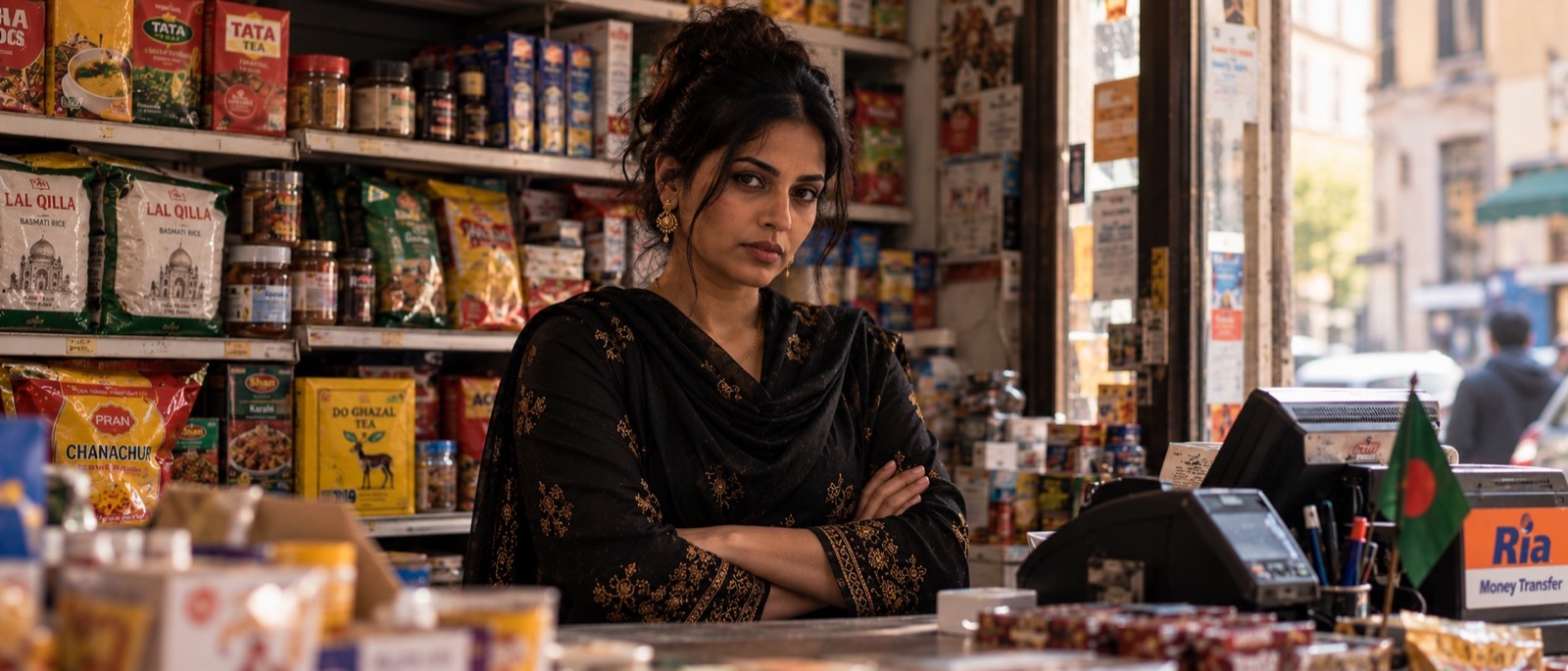 The DhakaGrocery · Money transferWhere everything passes through
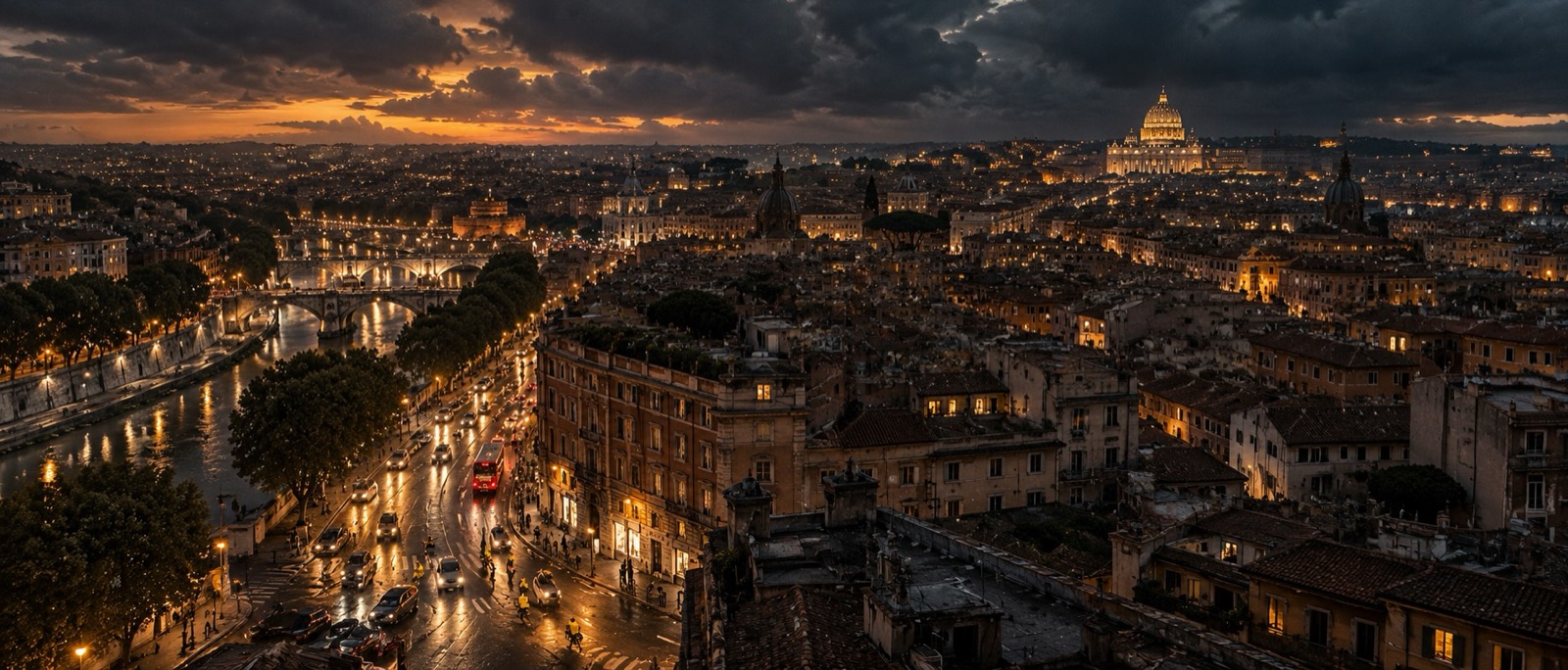 Logline · Synopsis · ValuesThe series
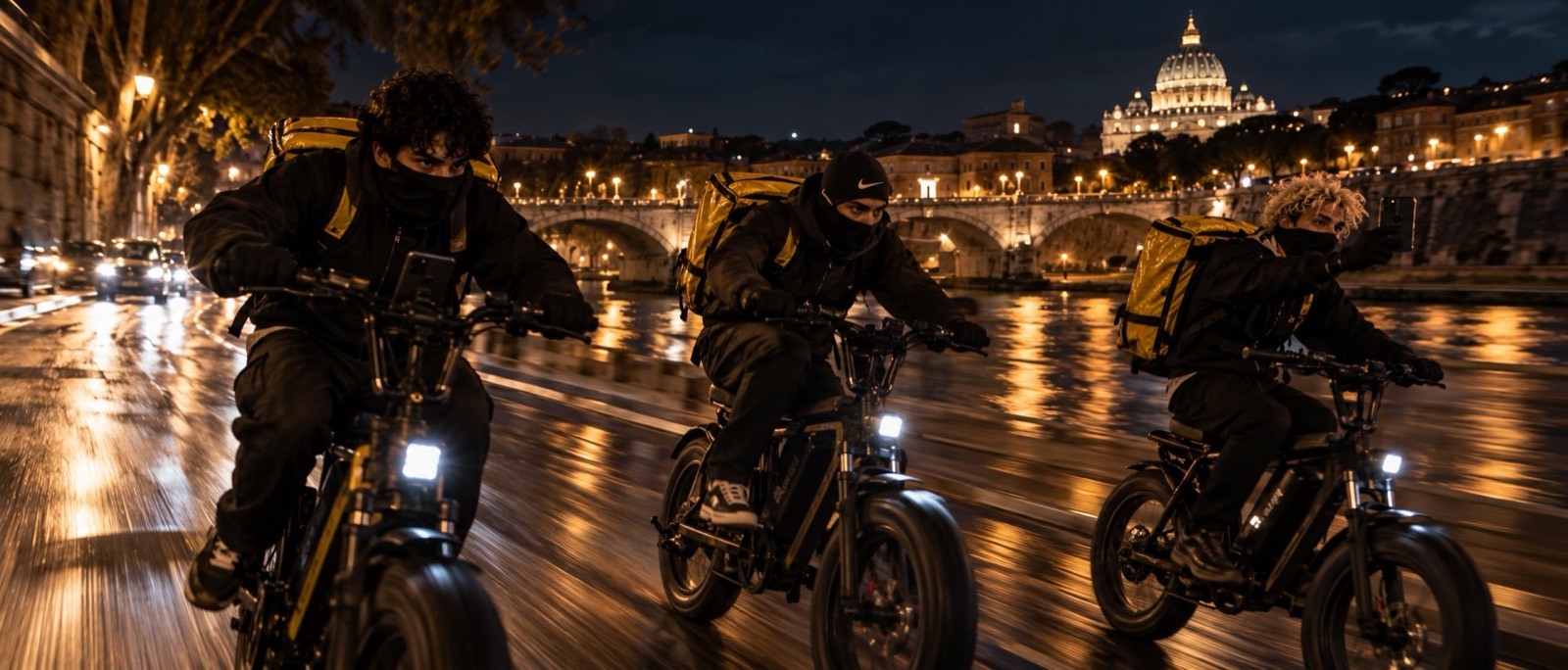 ৮ episodesEpisodes
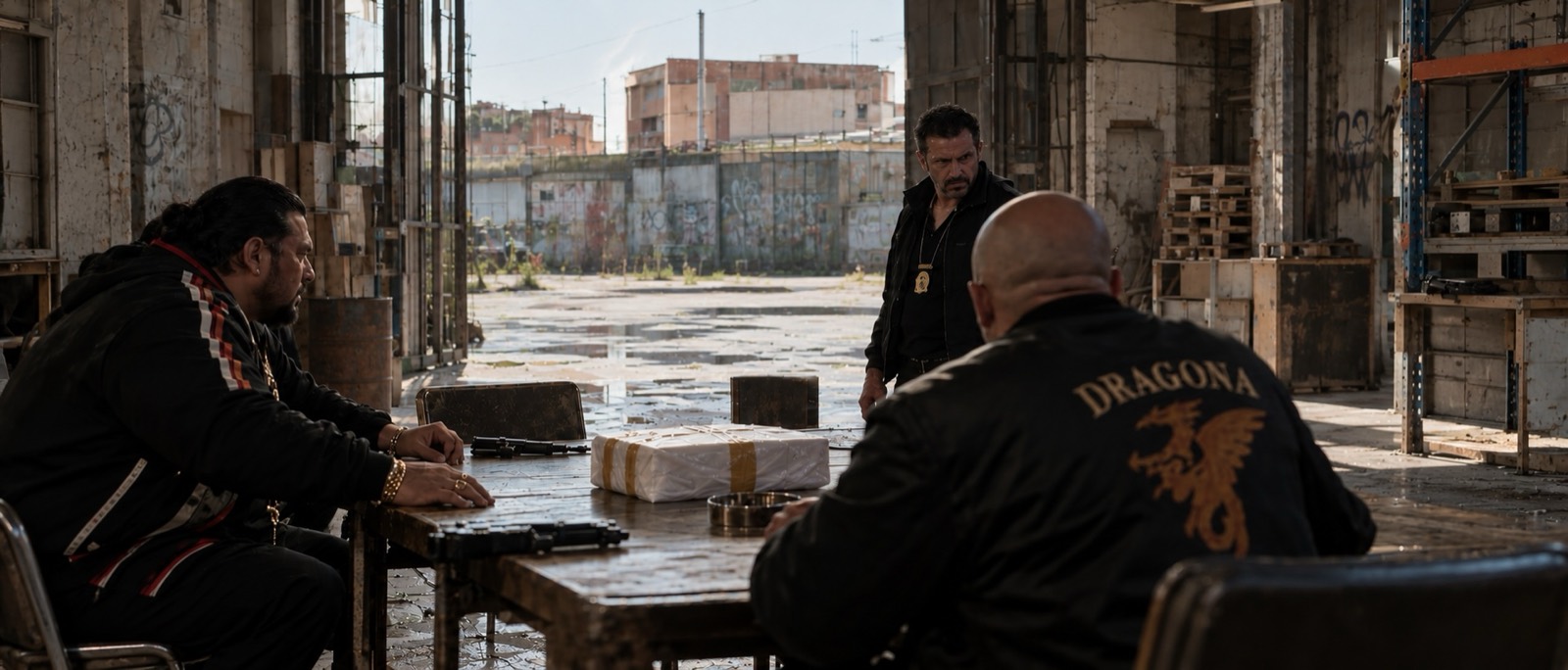 Dragona · Cops · BabuAntagonists
 Light · Camera · MusicLook book
 But…Season 2A king of Rome doesn’t run
The pitch
Created by Massimo Scognamiglio, from his story Riders on the Storm. October 2026.
In a nutshell · if you’re short on time
Four Bengali delivery riders walk into the homes they bring dinner to every night, and rob them live online. The more visible they become, the more they’re dead.
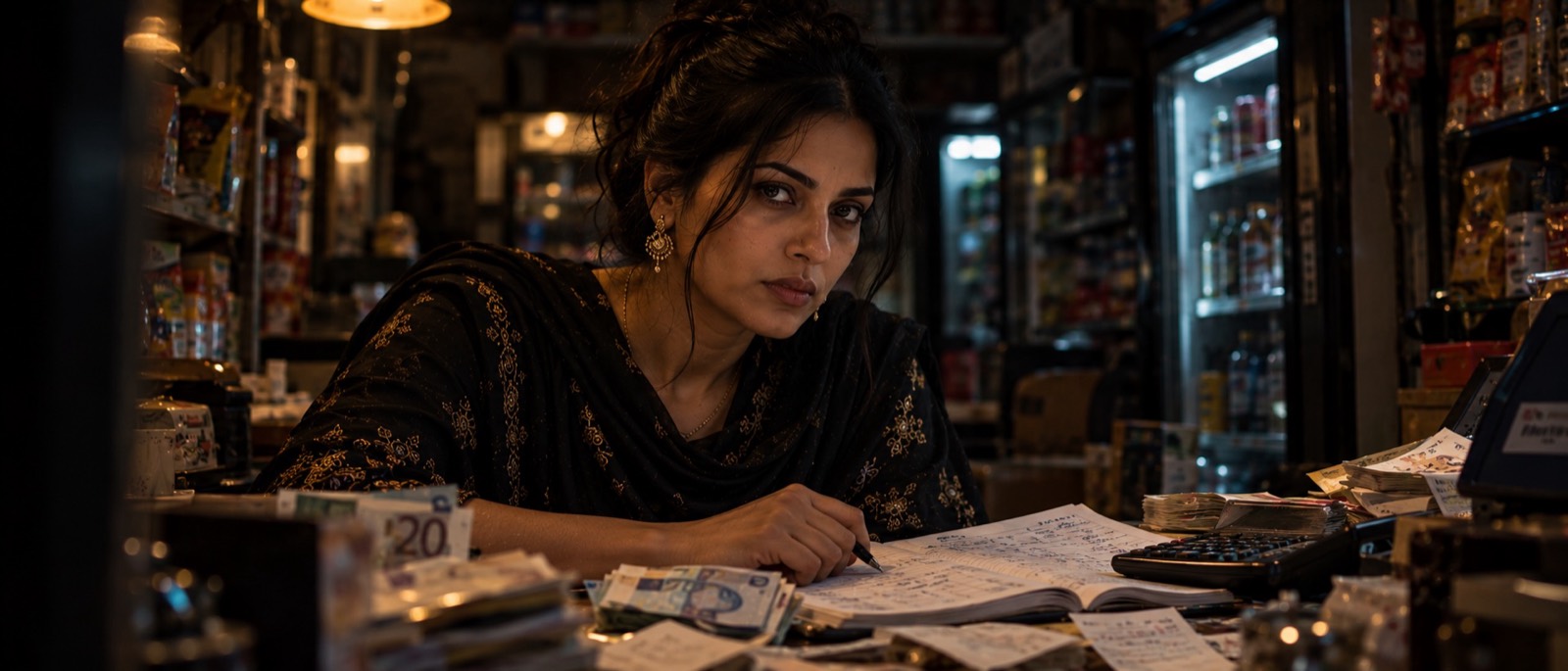
Behind them is Apa, the woman of the Dhaka Mini Market. To the four boys she’s a big sister. In truth she’s the boss: she picks the jobs and keeps the books on the money and the names. And she’s the one telling the story.
Because whoever has a home doesn’t run. And whoever has a home there can be found.
The series
Logline
Four Bengali delivery riders from East Rome steal a kilo of cocaine from the Dragona, the family that runs half the city. With the money they turn their delivery bikes into robbery machines and film every job on a social account that grows to a million and a half followers. They were invisible, and they become famous. The more people watch, the closer the end. Behind them is Apa, who keeps everyone’s accounts at the Dhaka Mini Market and tells the story.
Rome from above. The story looks at it from below.
Synopsis
East Rome, today. Ibrahim is a delivery rider who delivers pizzas with a surprise inside: small-time dealing. One night the surprise is pepper spray. In a Trastevere apartment he steals a kilo of cocaine from Massimo, a courier for the Dragona. With him are Rash, Ferro and Nab, who sleep on cots in his basement in Torre Angela. And there is Apa, who runs the community’s money transfer from the Dhaka Mini Market and knows everything about everyone.
Apa sells the kilo to two corrupt cops. With that money the Gang turns the bikes into robbery machines and starts hitting the homes of wealthy Rome, on tips that pass through the Dhaka. Nab films everything and posts it on @bengalboy.it. The live robbery on Via Giulia makes them famous overnight. Every job after that brings more followers and tightens the hunt: the police stop riders, the community pays, and the Dragona make Massimo talk before they kill him.
When Babu, the community’s loan shark, recognizes them and hires them for a kidnapping, the Gang agrees: “once, just once.” Recognized by the hostage, Ferro kills him. At the Boishakhi Mela festival the Dragona grab Ferro, and the boys find him in a garage in Torre Spaccata when it’s too late. Ferro dies without saying a word.
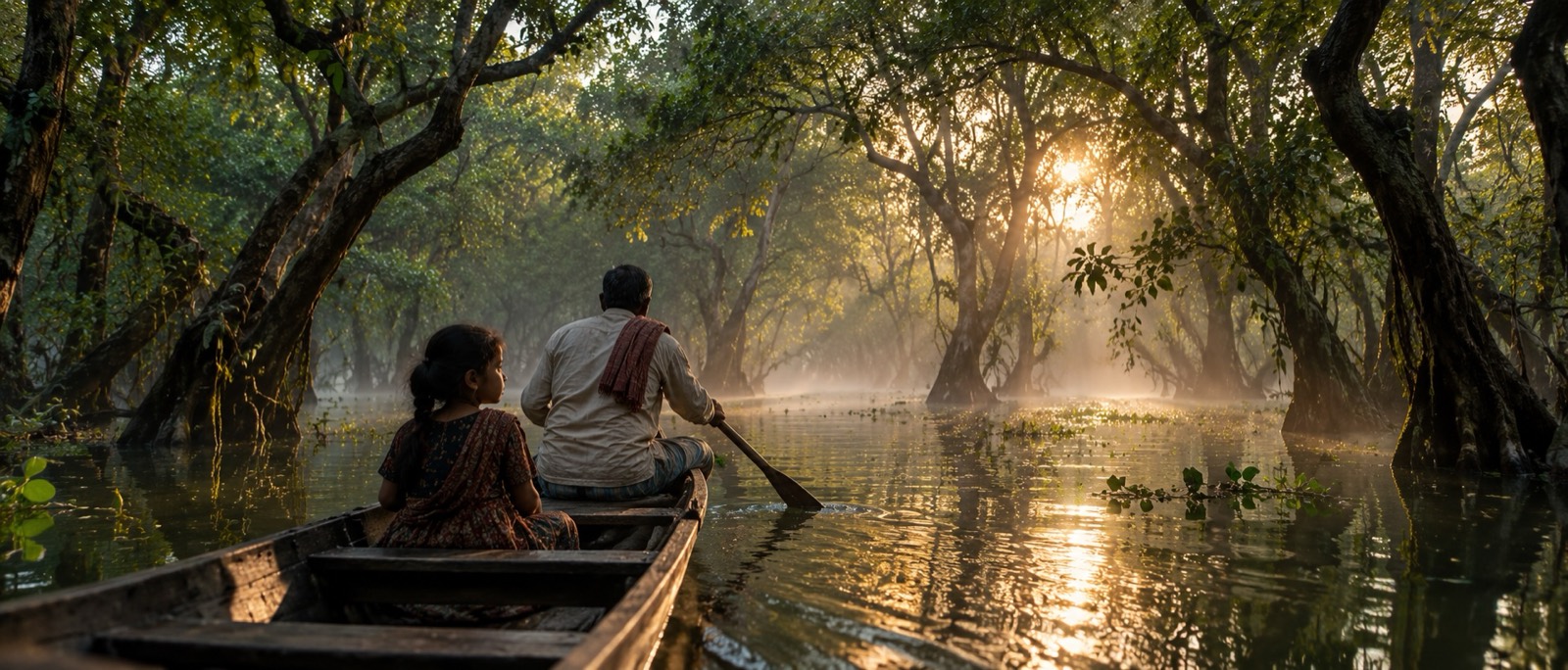
Apa puts the pieces together: she lures the cops, Babu and the Dragona to the same place and lets them kill each other, while the boys leave for the airport with the money. She stays at the Dhaka. Babu, the only survivor, finds her there. Season one ends with a point-blank shot and a childhood memory: a boat in the flooded forest of Ratargul.
What it’s about
Five people who trust only each other. Ferro dies without telling the Dragona anything, his head on Ibrahim’s shoulder. Nobody wants to leave without Apa.
“Guys, you’ve got everything ready? Passports? Tickets?” “Not without you.”
The boys who bring Rome its dinner without anyone looking at them decide to take the city. The Bengali motto says it plainly: the city is ours. But whoever becomes king of Rome can never leave.
“Rome was right there, just sitting, waiting for someone with the nerve to take it.”
Violence always has a price, even when it goes out live, and someone pays it: Massimo, Karim, Ferro, Apa. Every filmed job brings followers, and brings the Dragona closer.
“We aren’t invisible anymore, but the more visible we become, the more we’re dead.”
The central theme
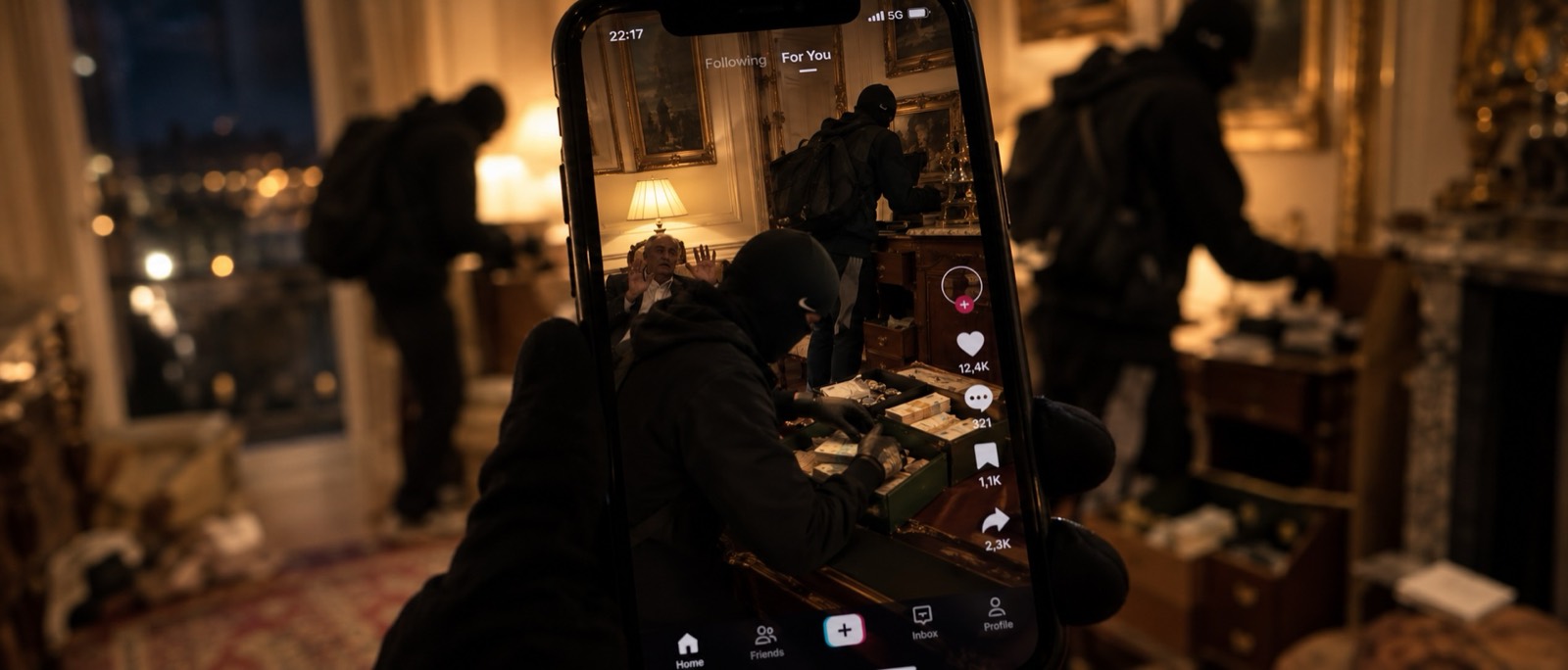
The livestreamed robberies are not a plot detail: they are the heart of the series. For the boys in the Gang, filming a job means three things at once.
Being seen is the first loot. Rash throws punches while looking into the lens, Nab zooms in on the banknotes fanning out. The job is worth as much as the video it leaves behind.
The kid who delivered dinner without anyone looking at him now has a million people waiting for the next video. Followers are reputation, a name, capital. For the first time they matter.
As in trap music, showing money, the street and violence is proof: it’s all real, we lived it. The video doesn’t tell the robbery, it certifies it. And that very truth leads them straight to the Dragona.
Sub-themes
Those nobody looks at and those everybody watches. Being invisible is an advantage, being famous a death sentence.
Rome to take, Rome that takes you. Whoever becomes king of Rome can never leave it.
The rawer the video, the more it gets rewarded. The platform raises the stakes with every job, and the Gang follows.
The Gang as brotherhood, Apa as big sister. Five people who trust only each other.
Loan sharks, kidnappings, informal courts. A city inside the city, with its own laws.
Sylhet, Ratargul, the Dhaka. Who leaves, who stays, and what it means to have a home.
Riders, dishwashers, the app’s timer. A generation that delivers dinner to people who don’t see it.
Ferro gives back a watch and spares a girl. Here, kindness is the biggest risk.
Why it’s different
Roman crime drama has told the stories of the Magliana gang, Ostia, politicians and property developers, always from the Romans’ side. Riders on the Storm stands on the other side of the intercom: the Bengali community, the riders, the streets of East Rome. It takes the best of that tradition and brings it where it has never been.
Why now
Every night riders cross our cities and almost nobody looks them in the face. Rome’s Bengali community is one of the largest in Europe, yet the screen has never told its story from the inside. Meanwhile social media has turned violence into content and followers into power. Riders on the Storm brings these three things together in a genre story.
Comparable titles
Audience
The European crime drama audience, ages 18–44, looking for new and authentic stories. Young people who live on social media and see @bengalboy.it as one of their own. South Asian diaspora communities in Italy and across Europe. For streaming platforms and pay TV, with international distribution.
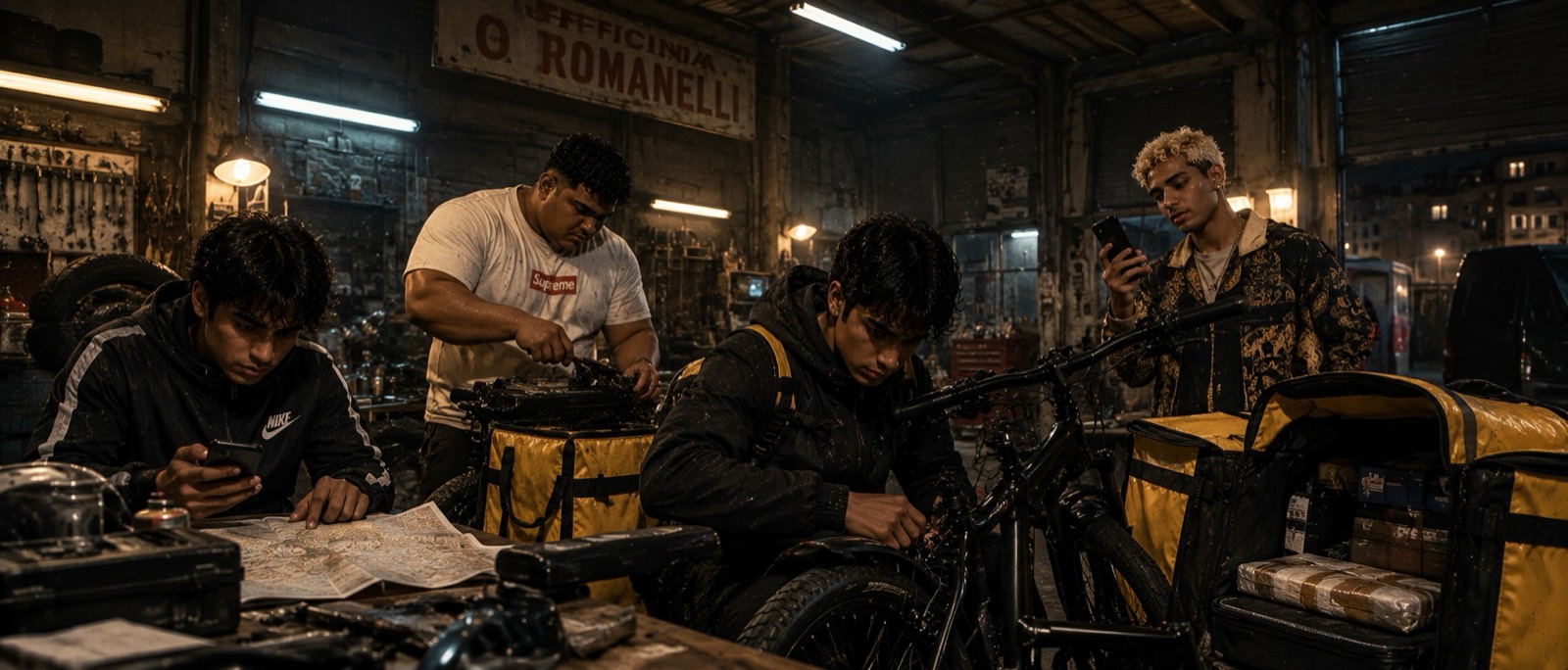
The Gang
They live in a 20-square-meter basement in Torre Angela. By day they deliver food, wash dishes and post videos. By night they are the Gang. Open a card to meet them.
The narrator
Samira Begum · 32 · “the big sister”
She doesn’t deliver, doesn’t run, doesn’t raise her voice. She runs the Dhaka Mini Market. She is the Gang’s brain and keeps everyone’s accounts.
Open the card →The place as protagonist
A grocery in East Rome with two humming fridges, a camera above the till and a Mecca calendar. It’s small, but half the world fits inside.
Money heading back to Bangladesh, Pakistan, India and Sri Lanka passes through the Dhaka, and so do the tips. It is the community’s bank, its confessional, and the Gang’s operations room. Here Apa sells the kilo to the cops, Babu leaves his job, the Dragona send their errand man for a phone top-up. Here everything ends.
In the series the Dhaka is a character and changes with the story: a refuge at the start, a target at the end. In season two it is seized, with police seals on the shutter.
No creditA day at the Dhaka
The map
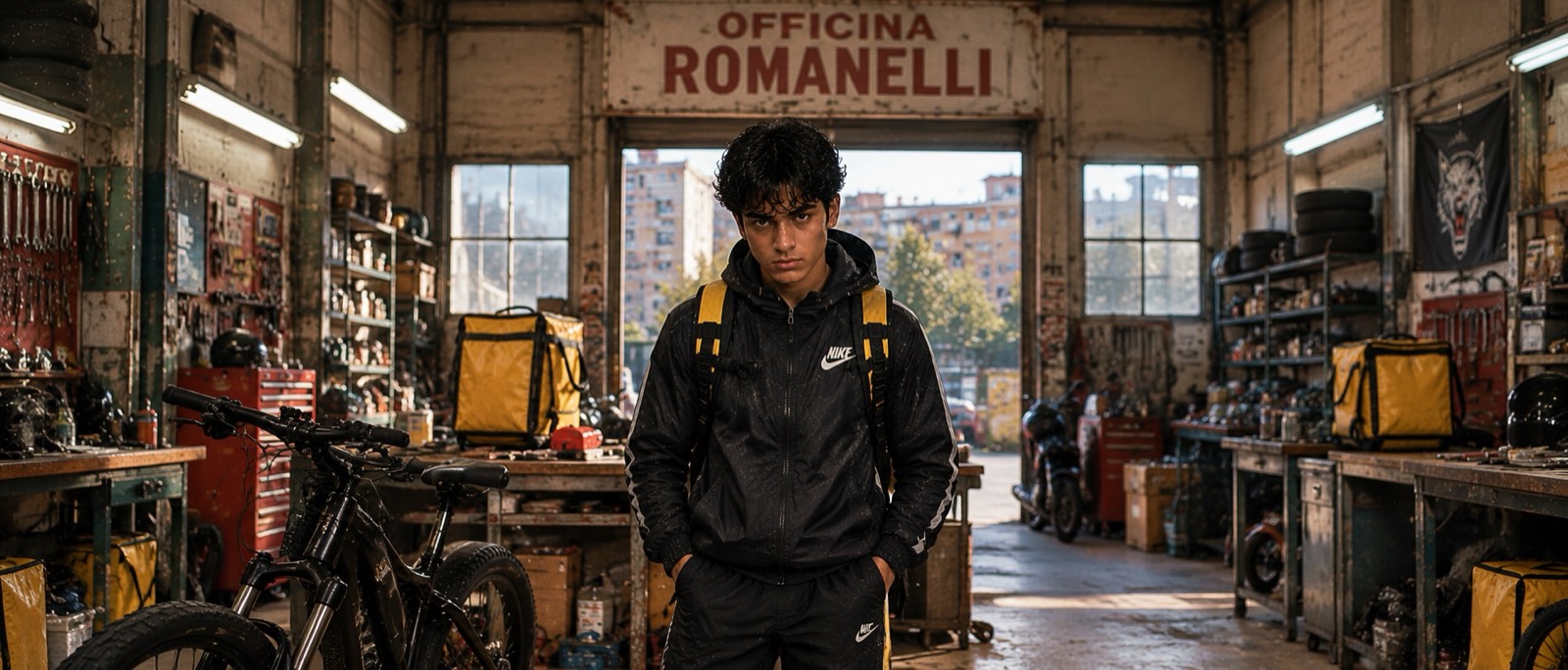
A half-closed body shop. Bikes with motors hidden in the hubs, thermal bags with false bottoms, guns with filed-off serial numbers.
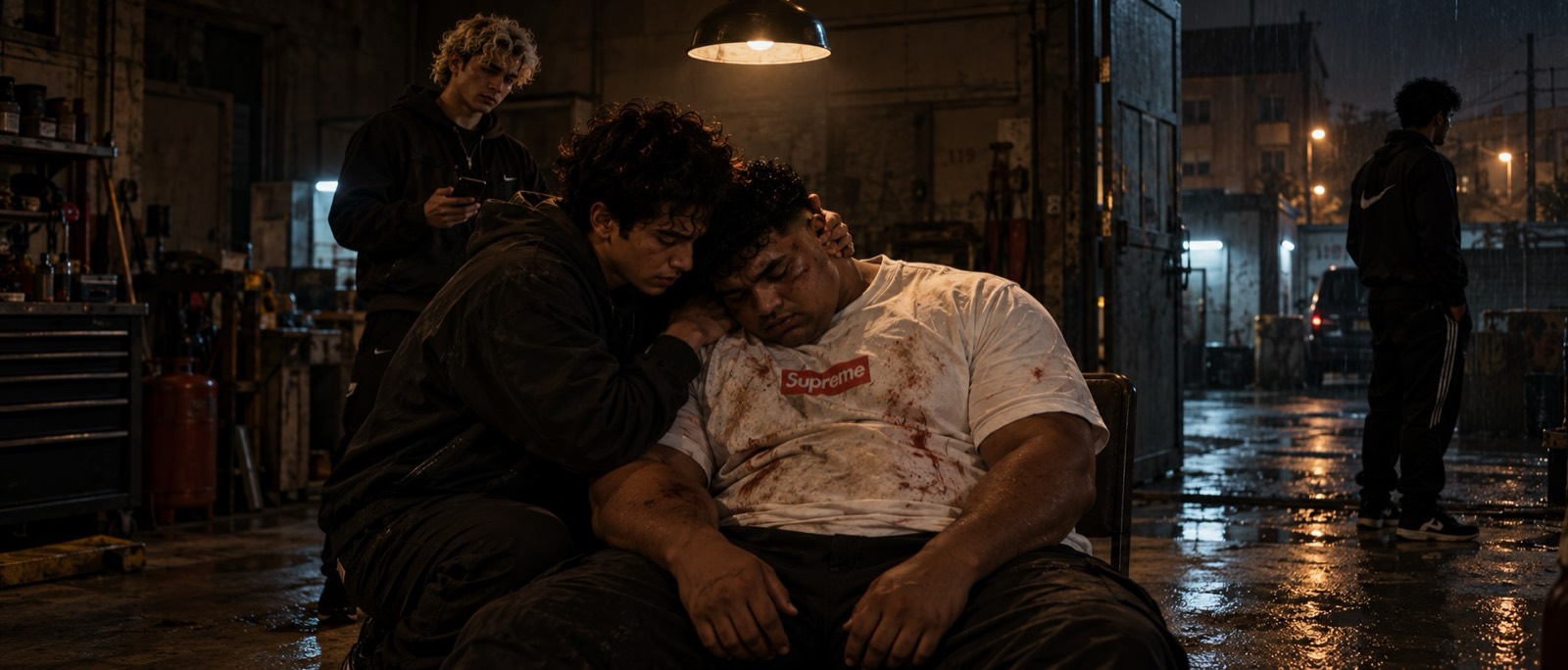
A green sheet-metal door, a chair in the middle, a car battery with the cables already attached.
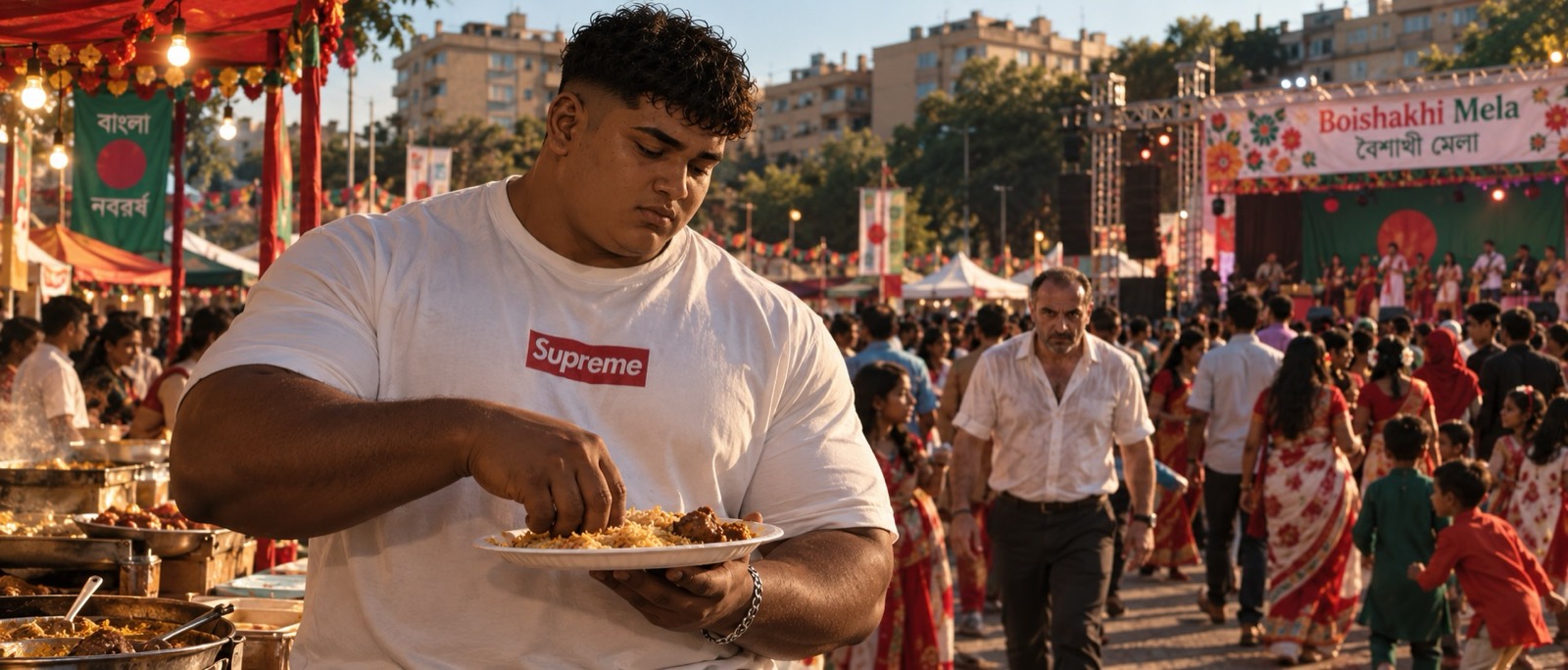
Bengali New Year: red saris, coconut rice, the stage. And the Italians who didn’t come to eat.
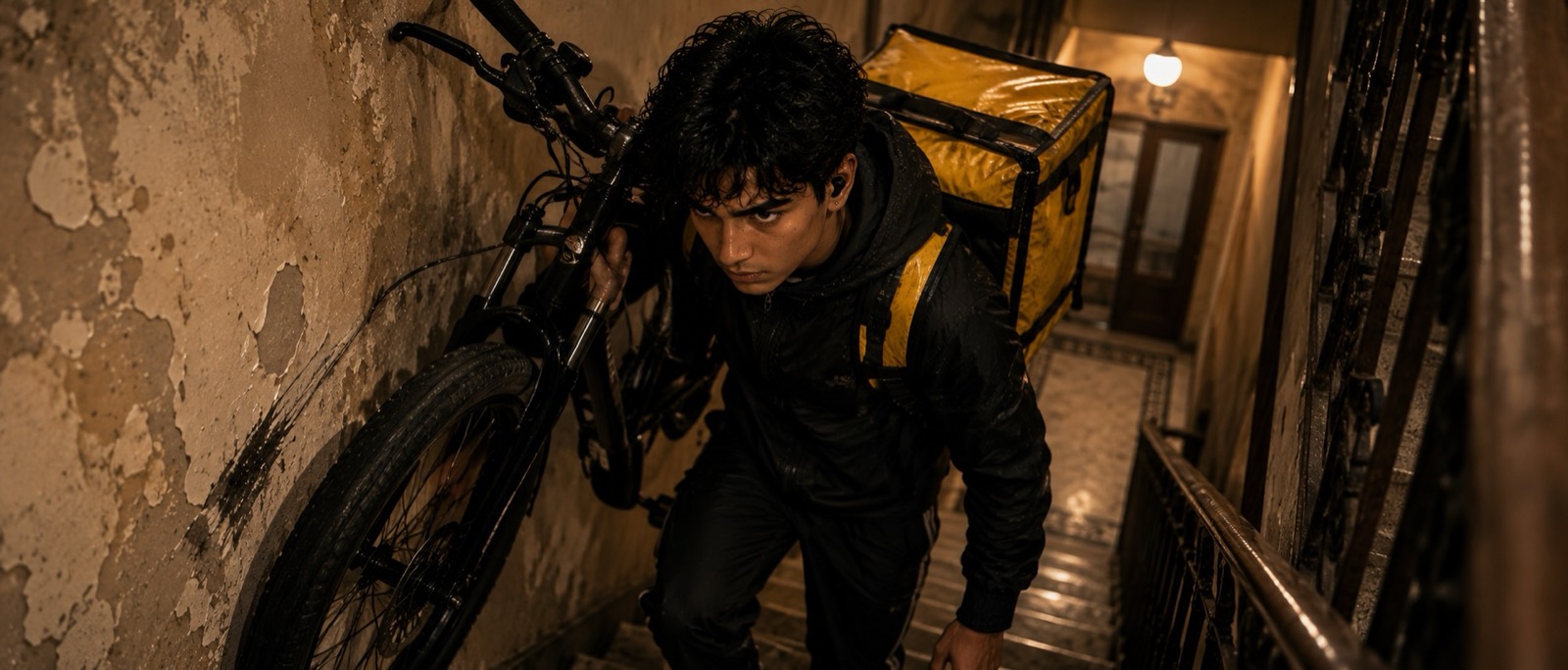
The homes riders climb up to every night with a pizza. This time they come up with a gun.
After every job, bikes racing along the river, with Tumi Amar in their earbuds.
Apa’s memory: a narrow boat among the trees, her father rowing without turning around.
Antagonists
Three powers carving up East Rome to keep the peace, until the Gang breaks the balance. The finale puts them all in the same room.
Vincenzo Dragona runs half of Rome. Only they lend at loan-shark rates, only they decide who opens and who burns. When a kilo goes missing the price doesn’t matter: nobody screws the Dragona. First they ask questions politely, then in a garage in Torre Spaccata.
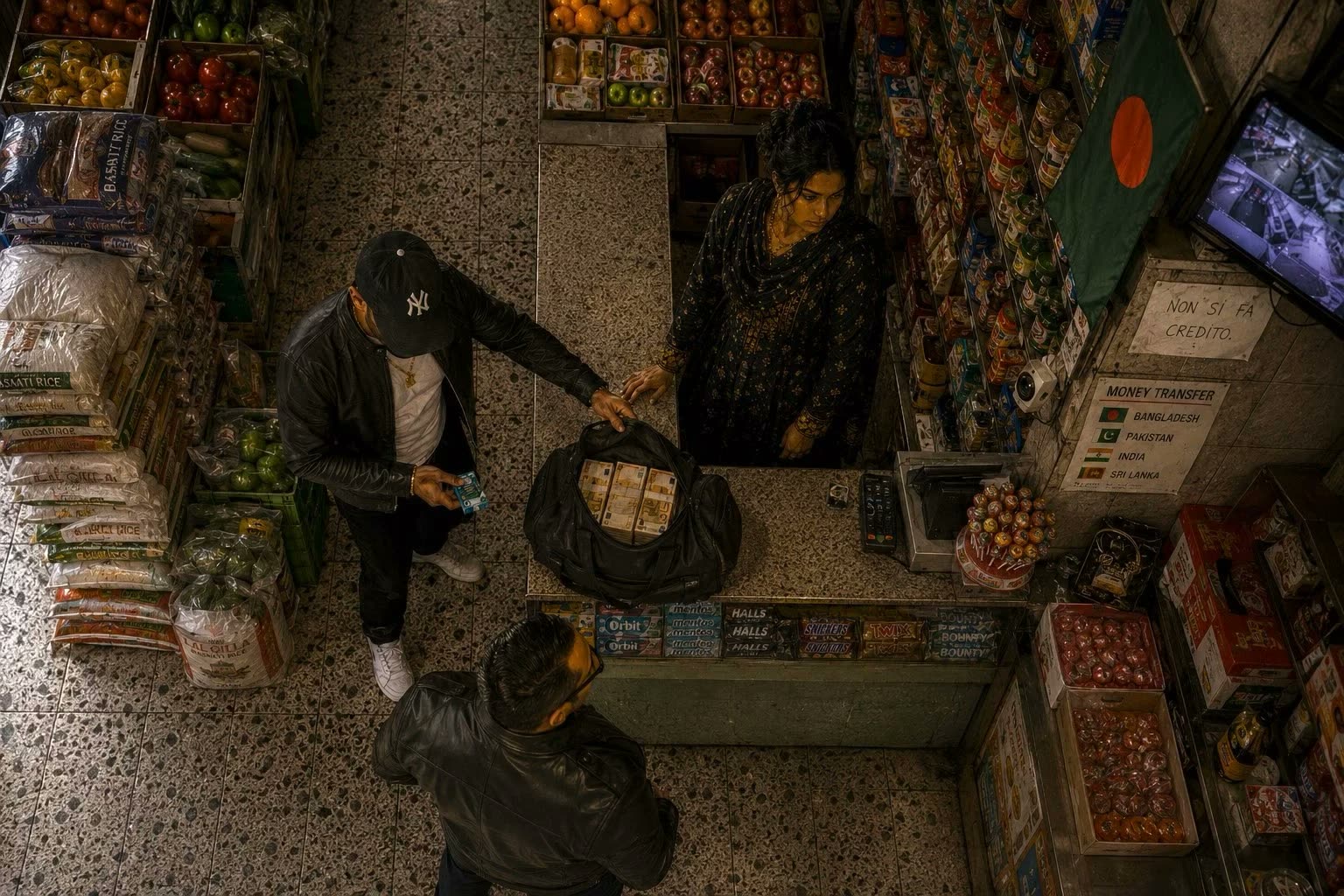
Two clean-faced Italians with shoes too expensive for their job. One wears a Yankees cap and never faces the camera. They collect “voluntary contributions” from shopkeepers and buy the Gang’s kilo for fifty thousand euros. Then they get scared.
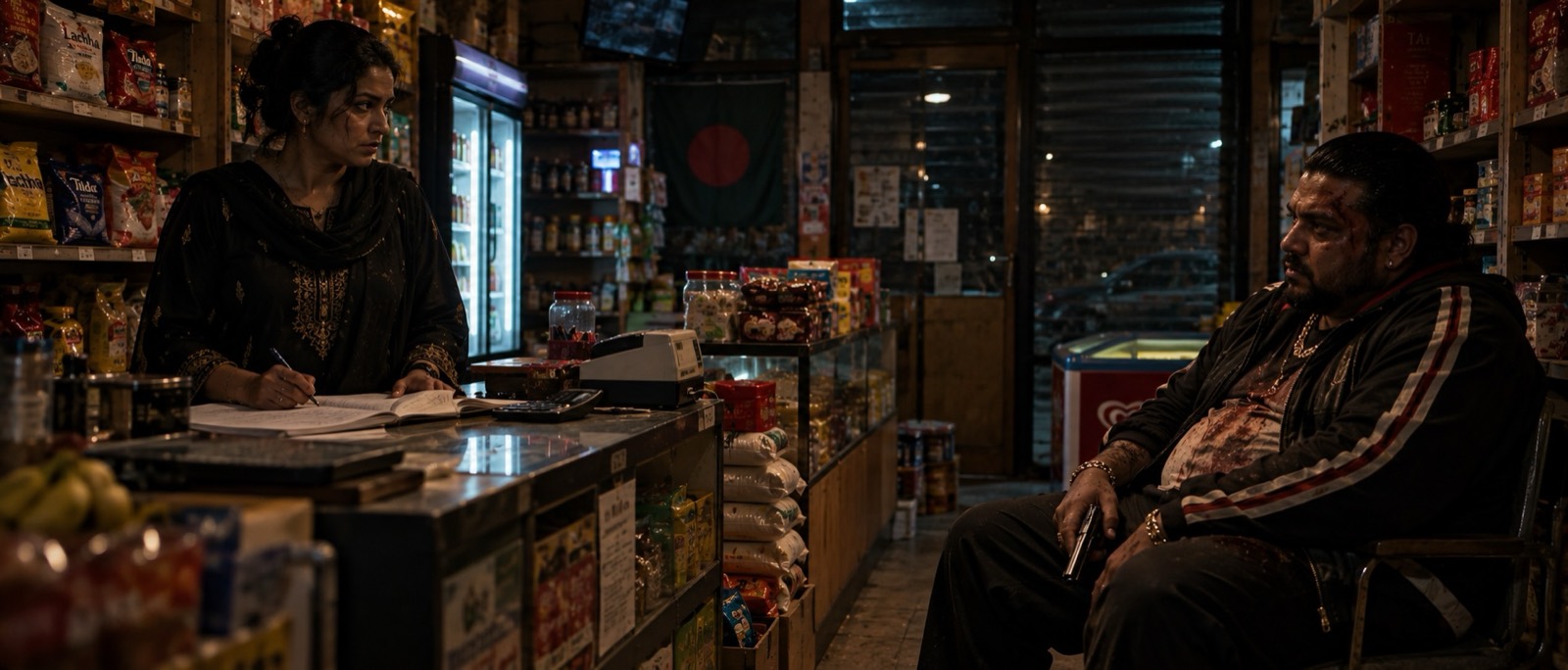
The community’s loan shark. He lends ten thousand euros and wants a hundred thousand back. He can’t squeeze people in the street without stepping on the Dragona’s toes, so he hires the Gang to kidnap Karim. Just once, they say. He is the only one who survives the showdown, and he walks into the Dhaka covered in blood.
The fourth antagonist
Nab’s account is both their ally and their enemy. Every robbery pushes the numbers up, and every video brings someone closer to the Dhaka’s door. In the series, the numbers mark the episodes.
Season one
The story has a prologue and twelve chapters. The series spreads them over eight episodes and adds jobs and storylines the story only hints at. Open an episode to read it.
The job that changes everything, the kilo sold to the cops, the workshop. Nobody is watching them, and that’s their edge.
The Via Giulia livestream and the robberies in wealthy Rome. A million people are watching, and the city starts looking for them.
The kidnapping, Ferro’s death, Apa’s trap. Everyone knows who they are, and someone has to pay the bill.
But…
Season two
Apa isn’t dead. And the boys never got on that plane.
Apa wakes up from a coma and her kingdom is gone. The police have seized the Dhaka: shutter sealed, fridges off, counter empty. Then an accountant nobody knows comes looking for her. He knows about the books, the thousand trickles, more than he should.
Who did Apa do big favors for?
Apa had prepared everything to make them disappear, but she couldn’t make them run. Whoever becomes king of Rome doesn’t leave Rome: leave, and you lose it. Season two picks up from that point-blank shot in the Dhaka, three million spread across a thousand trickles, and a city that now knows who they are. Babu is still alive. The Dragona have lost men and face. @bengalboy.it has one million four hundred thousand people waiting for the next video.
Look book
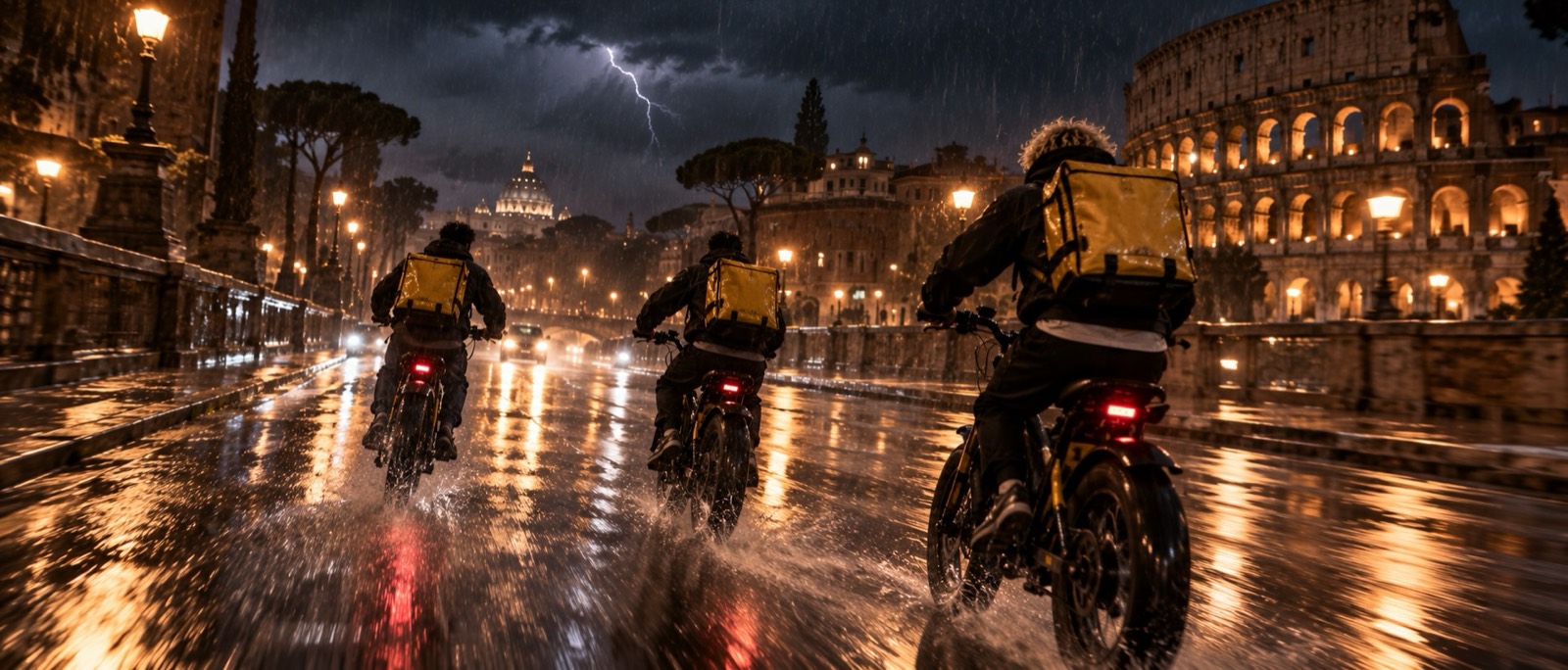
The trailer already sets the look of the series. Rome’s darkness in the rain, and on top of it the community’s colors: the yellow backpack, the red saris, the green of the flag.
Night, rain, sodium lamps and shop signs. Full daylight belongs to the Dhaka, the workshop and the memory of Ratargul.
At bike height. Long one-take rides, the app’s timer on screen, Rome rushing past without ever stopping on a postcard.
@bengalboy.it’s vertical videos enter the story with their comments. The audience watches along with the followers.
Bangla-tech over the titles, with a whole generation of Bengalis dancing in front of the Colosseum. Habib Wahid’s Tumi Amar under the robberies, Esho he Boishakh at the Mela.
Primary language Italian or English, depending on the production. Secondary language Bengali (Bangla), subtitled, plus Roman street slang. The motto “Shohor amader. Bhoy karor na.” returns like a refrain.
Performers from Rome’s Bengali community, alongside Roman actors for the Dragona and the cops.
Budget estimate
An indicative estimate, based on average costs of high-end Italian crime series made for streamers and pay TV. To be confirmed with a producer and a production schedule.
Italy’s national tax credit for audiovisual production and Lazio Region funds can cover a significant share of the costs.
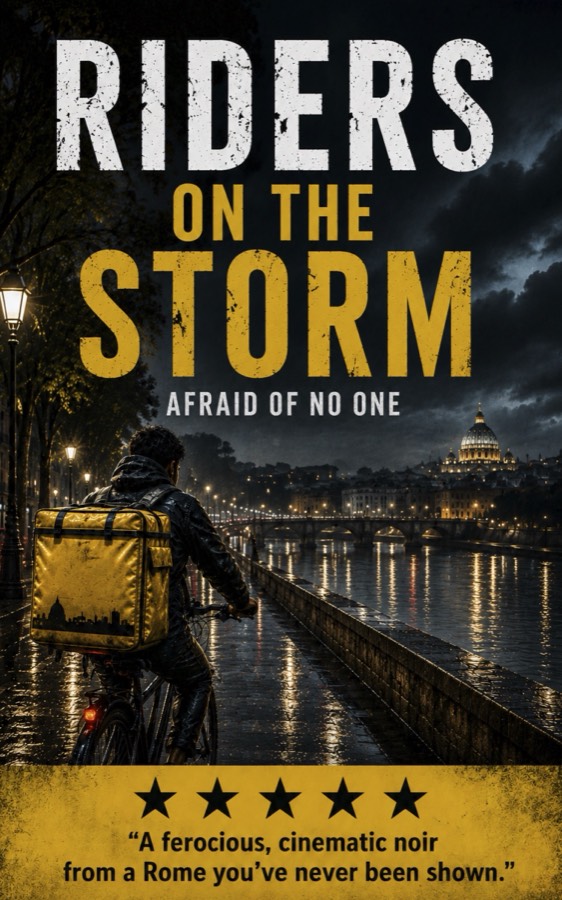
The story
A story by Massimo Scognamiglio. A prologue and twelve chapters, narrated by Apa.
The author
Massimo Scognamiglio is an artist, photographer, technologist and writer. For more than thirty years he has worked across visual arts, literature and digital innovation. He has exhibited in Italy and abroad, including at the MACRO Museum and the Palazzo delle Esposizioni in Rome, and in 1996 he founded one of Italy’s first web companies in Rome. He has lived in California and the American Midwest. He also made the trailer.
At the Dhaka the radio is always on. On air: Spotify’s “Bangla Pop” playlist. Open in Spotify